
Hyperbaric Oxygen Therapy Treatments, Benefits & Recovery Applications
Hyperbaric oxygen therapy combines increased atmospheric pressure with oxygen exposure to substantially increase oxygen availability in the body. In clinical hyperbaric medicine, carefully selected protocols are used for specific medical conditions, while hyperbaric technology is also increasingly incorporated into rehabilitation, athletic recovery, post-procedure care and longevity-focused programs.
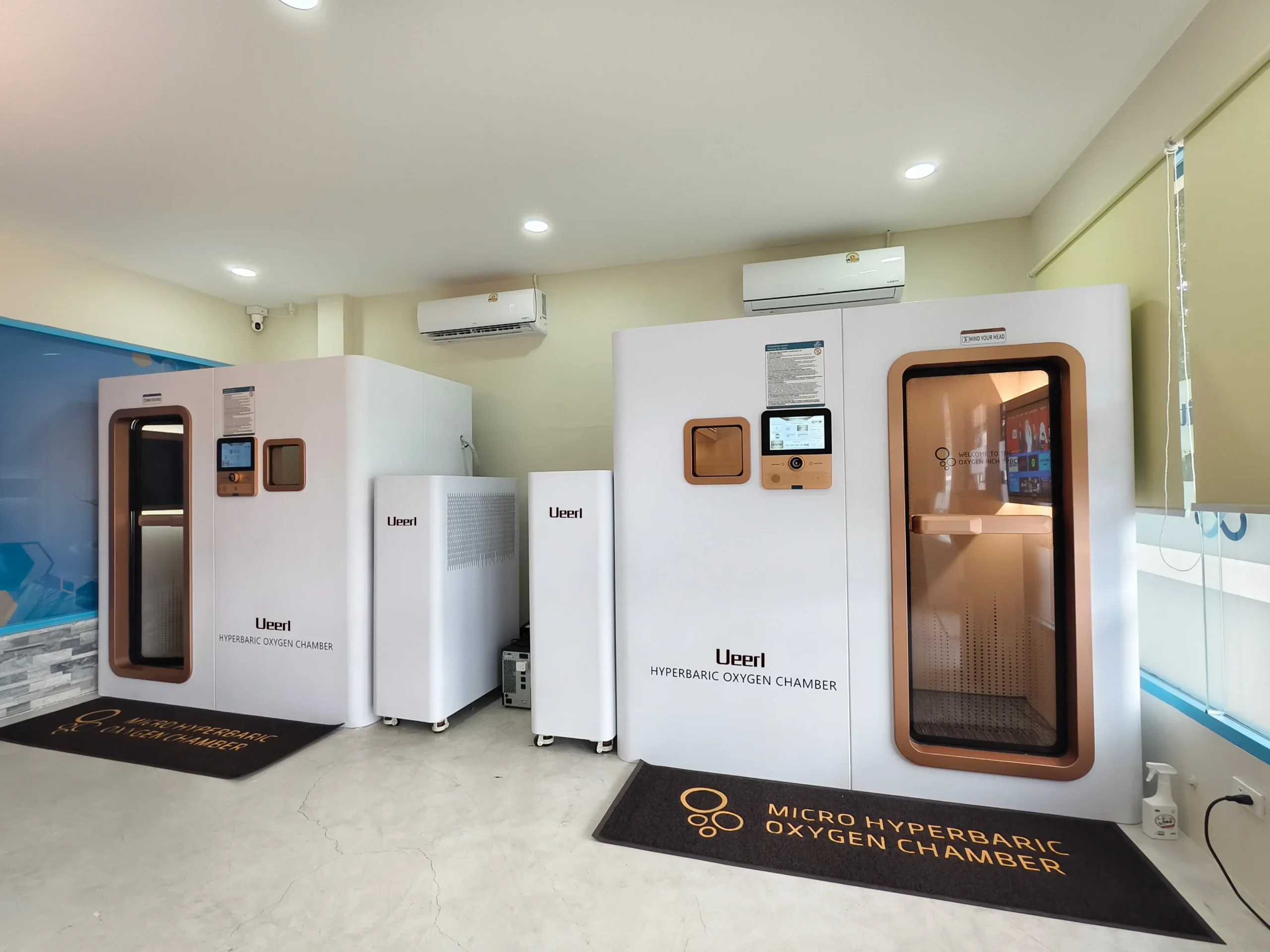
How does hyperbaric oxygen therapy work? HBOT exposes the body to pressure above normal atmospheric pressure while oxygen is administered during the session. Increased pressure raises the amount of oxygen that can be carried in blood plasma and increases oxygen availability to tissues. Depending on the clinical indication and protocol, these physiological effects can contribute to wound healing, tissue repair, management of selected infections and recovery of oxygen-deprived tissue.

What Happens Inside a Hyperbaric Oxygen Chamber?
At normal atmospheric pressure, most oxygen in the bloodstream is transported by hemoglobin. When pressure increases inside a hyperbaric chamber and oxygen is administered according to the treatment protocol, substantially more oxygen can dissolve directly into plasma.
This increases the oxygen gradient between circulating blood and nearby tissues. In appropriate clinical situations, greater oxygen availability can support tissues where normal oxygen delivery has been reduced by vascular compromise, swelling, injury, infection or other pathological processes.
What Conditions Can Hyperbaric Oxygen Therapy Treat?
Physician-directed clinical HBOT is used for selected conditions in which increased oxygen delivery, pressure-related effects or both can provide therapeutic benefit.
Carbon Monoxide Poisoning
Hyperbaric oxygen can accelerate displacement of carbon monoxide while restoring oxygen delivery to tissues vulnerable to hypoxic injury.
Decompression Sickness
Recompression is an established treatment strategy used to reduce gas bubbles and restore oxygen delivery following decompression illness.
Air or Gas Embolism
Increased pressure can reduce intravascular gas-bubble volume while oxygen supports affected tissue.
Selected Non-Healing Wounds
Some diabetes-related and other difficult wounds may receive HBOT as part of a broader specialist wound-care program.
Radiation Tissue Injury
HBOT may be used for selected delayed radiation injuries where impaired vascularity and tissue oxygenation interfere with healing.
Crush Injury & Acute Ischemia
In selected traumatic injuries, HBOT may be used alongside standard medical and surgical care to support compromised tissue.
Certain Serious Infections
HBOT can form part of multidisciplinary treatment for selected severe infections alongside appropriate surgery and antimicrobial therapy.
Compromised Grafts & Flaps
HBOT may be considered when selected grafts or tissue flaps are threatened by inadequate oxygenation.
Selected Tissue Injuries
Hyperbaric medicine can also be used for additional recognized indications when diagnosis and treatment protocols support its use.
How Hyperbaric Oxygen Can Support Healing & Recovery
Hyperbaric treatment changes both oxygen availability and environmental pressure, producing several physiological effects relevant to specific clinical and recovery applications.
More Dissolved Oxygen
Increased pressure allows more oxygen to dissolve directly into plasma, increasing oxygen available for delivery throughout the circulation.
Supports Hypoxic Tissue
A stronger oxygen gradient can support diffusion toward tissues where normal perfusion and oxygen availability are compromised.
Supports Wound Repair
Oxygen is required for several stages of tissue repair, including cellular metabolism, collagen-related processes and remodeling.
Angiogenesis
Repeated clinically controlled exposure can influence signaling involved in formation of new blood vessels in recovering tissue.
Immune Function
Oxygen availability influences several immune mechanisms and can be clinically relevant within selected infection-management protocols.
Pressure Effects
In conditions such as gas embolism and decompression illness, recompression helps reduce gas-bubble volume.
Different HBOT Applications Have Different Levels of Evidence
Distinguishing established clinical indications from adjunctive applications and emerging research helps readers understand which uses are part of established hyperbaric medicine and which remain developing areas of investigation.
Recognized Clinical Indications
Applications such as decompression illness, gas embolism, carbon monoxide poisoning and selected wound or tissue injuries have defined roles within modern hyperbaric medicine.
Rehabilitation & Recovery
HBOT can be incorporated into broader rehabilitation or treatment plans in selected situations alongside conventional care, physiotherapy and recovery management.
Longevity, Performance & Wellness
Healthy aging, sports performance, cognition and longevity remain active fields of research. Individual experiences are useful context but do not establish universal treatment outcomes.
Hyperbaric Oxygen Treatment & Recovery Applications
Explore dedicated Ueerl content covering home oxygen routines, healthy aging, athletic recovery, beauty, high-performance lifestyles and professionally guided recovery.
 01
01
Daily Oxygen Care at Home
Explore how a room-style chamber can fit into a consistent private oxygen and recovery routine.
Explore Home Care → 02
02
Anti-Aging & Beauty Recovery
Explore tissue oxygenation, skin recovery and developing research around healthy-aging applications.
Explore Beauty Recovery →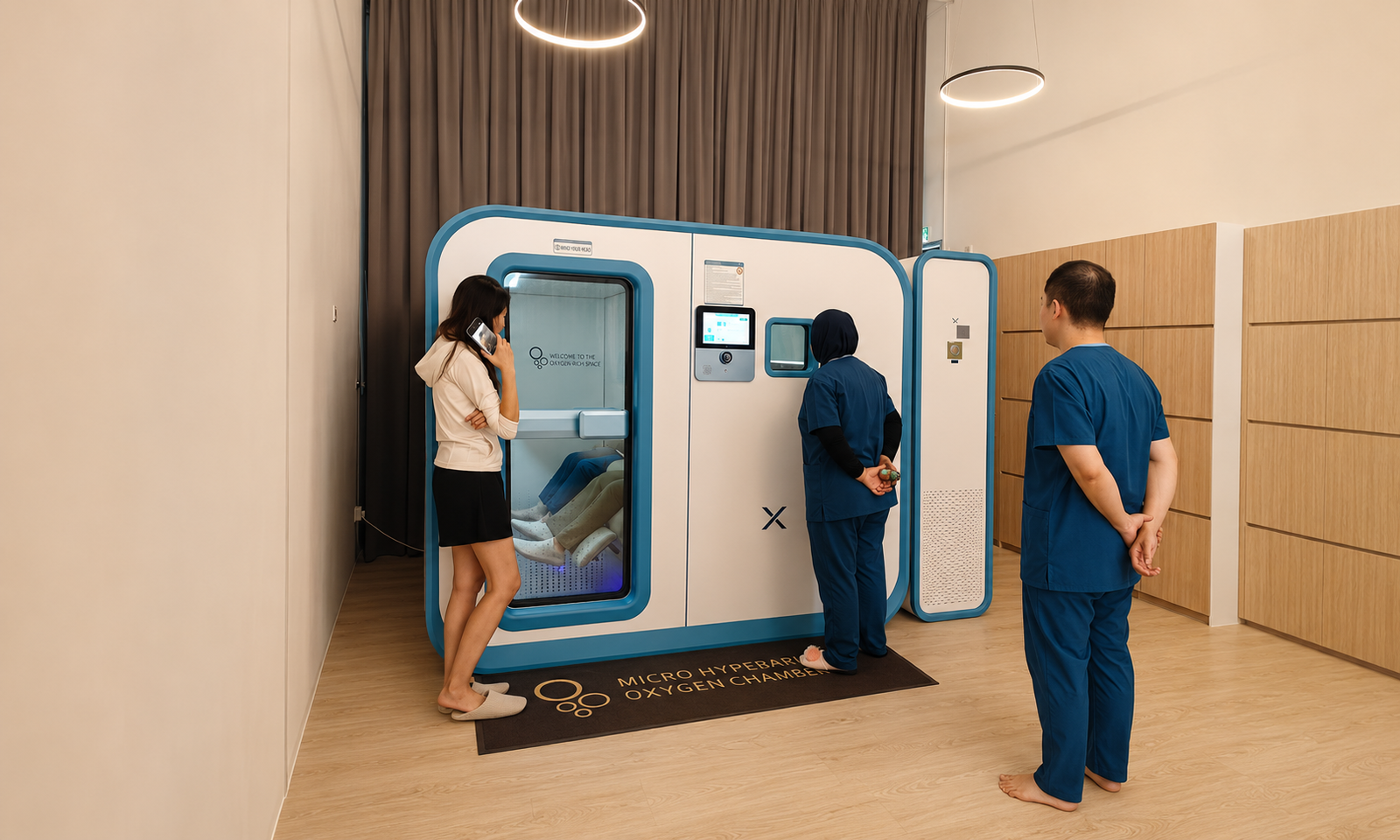 03
03
Senior Health Management
Explore how professionally managed hyperbaric programs may fit into broader senior health and recovery planning.
Explore Senior Health → 04
04
Energy Recovery & High-Performance Work
Explore structured recovery environments for executives, entrepreneurs and professionals managing intensive schedules.
Explore Energy Recovery → 05
05
Sports Recovery & Athletic Performance
Learn why athletes and performance teams incorporate hyperbaric technology into broader rehabilitation and recovery programs.
Explore Sports Recovery → 06
06
Premium Wellness Lifestyle
Integrate hyperbaric sessions into luxury longevity, recovery and private health-management spaces.
Explore Premium Wellness →
07
Post-Procedure & Chronic Wellness Management
Explore where professionally guided hyperbaric care can fit within selected tissue and procedural recovery pathways.
Explore Recovery Support → 08
08
Sleep, Stress Relief & Emotional Wellness
Explore how a private recovery environment can complement broader sleep and stress-management routines.
Learn More →Athletes, Celebrities & Biohackers Who Have Used Hyperbaric Chambers
Public reporting shows hyperbaric chambers being used across elite sports, injury rehabilitation, post-procedure recovery and modern longevity culture.
These examples are based on published interviews, reputable media reporting or publicly documented use. Their personal experience shows real-world adoption but should not be interpreted as proof that another person will experience the same outcome.
LeBron James' long-time trainer Mike Mancias has described hyperbaric chamber use as one component of the NBA star's extensive recovery system alongside flexibility work, yoga, training management and meditation.
GQ report ↗ Independent media reportUFC champion Zhang Weili has been publicly documented using hyperbaric technology within high-intensity training and recovery routines, reflecting its growing visibility in professional combat sports.
Publicly documented use Athlete recovery exampleFour-time Tour de France winner Chris Froome said hyperbaric chamber sessions became a significant part of his rehabilitation after his severe 2019 cycling accident.
Velo report ↗ Direct athlete interviewAfter surgery for a torn meniscus in 2024, Novak Djokovic's rehabilitation program was reported to include flexibility work, training exercises and sessions in a pressurized hyperbaric chamber as he prepared for a rapid return to competition.
The Times report ↗ Independent sports reportingFollowing his severe snowplow accident, Jeremy Renner publicly described hyperbaric sessions at approximately 2 atmospheres as a continuing part of his recovery and wellness routine.
PEOPLE report ↗ Public first-person statementJustin Bieber publicly shared footage of himself using a hyperbaric oxygen chamber during a period focused on personal health and recovery.
ABC News report ↗ Publicly documented useMarc Jacobs told British Vogue that he was visiting a hyperbaric oxygen chamber daily during the early stage of recovery following facelift surgery.
British Vogue ↗ Direct interviewLongevity entrepreneur Bryan Johnson has publicly documented a structured HBOT protocol involving 2 ATA pressure, 100% oxygen through a mask and a 60-session program.
Blueprint protocol ↗ First-party published protocolBiohacking entrepreneur Dave Asprey has repeatedly featured hyperbaric oxygen therapy in discussions about modern recovery, longevity and human-performance optimization.
Human Upgrade feature ↗ First-party published contentWhat Happens During a Hyperbaric Oxygen Session?
Exact procedures vary by chamber system and treatment protocol, but a hyperbaric session normally follows several controlled stages.
Assessment & Preparation
Relevant medical, operational and safety requirements are reviewed before entering the chamber.
Controlled Pressurization
Chamber pressure gradually increases while the user equalizes ear pressure and adapts to the environment.
Oxygen Exposure
Oxygen is delivered according to the applicable system and protocol during the treatment or recovery period.
Gradual Decompression
Chamber pressure gradually returns toward normal atmospheric pressure before the session ends.
Hyperbaric Engineering Experience Behind Ueerl
Effective hyperbaric projects involve more than chamber pressure. Manufacturing quality, pressure systems, oxygen generation, control architecture, installation, user experience and long-term service all influence the final solution.
Ueerl focuses on the research, engineering and manufacturing of single-user, two-person and multi-person room-style hyperbaric chambers.
Manufacturing combines pressure-vessel engineering, oxygen generation, air-circuit control, monitoring systems and multiple operating protections.
Ueerl chamber configurations serve private residences, recovery centers, wellness facilities, commercial projects and multi-user environments.
Sources Behind the Treatment Information on This Page
Clinical treatment information on this page is organized around established hyperbaric-medicine references, regulatory safety guidance and major medical institutions. Recognized clinical indications are kept separate from developing recovery, longevity and performance research, while public-figure examples are linked to attributable interviews or published reports where available.
Content reviewed against cited sources · August 7, 2026The treatment section prioritizes recognized hyperbaric indications and condition-specific medical guidance rather than using general wellness claims as clinical evidence.
Pressure management, oxygen safety, fire prevention, staff training, patient monitoring and maintenance are presented alongside treatment benefits.
Established treatment uses, adjunctive recovery applications and emerging longevity or sports research are clearly separated so that readers can understand the strength and purpose of each type of evidence.
Athlete, celebrity and biohacker examples are treated as documented real-world use rather than proof of effectiveness, with source links provided wherever a reliable attributable report is available.
Ueerl's chamber engineering, quality-management, manufacturing and installation information is presented separately from independent clinical references so readers can distinguish product information from medical evidence.
Safe Hyperbaric Treatment Requires More Than Pressure
Safe operation depends on suitable equipment, pressure control, oxygen-management procedures, fire prevention, user or staff training, monitoring and preventive maintenance. Clinical HBOT requires the level of medical oversight appropriate to the condition being treated.
Relevant lung, ear, sinus, medication and other medical considerations should be reviewed before clinical treatment.
Pressurization and decompression need to be controlled so pressure equalization can occur safely.
Oxygen-rich environments require strict procedures regarding ignition sources, materials and prohibited items.
Operators should understand normal operation, communication, emergency procedures and chamber-specific instructions.
Filters, seals, valves, oxygen systems, pressure components and communication systems require scheduled inspection.
Medical HBOT protocols require appropriate assessment, prescription and clinical supervision.
Hyperbaric Oxygen Therapy Treatment FAQ
Clear answers to common questions about HBOT treatment, clinical uses, recovery applications and chamber selection.
What is hyperbaric oxygen therapy?
Hyperbaric oxygen therapy involves exposure to pressure above normal atmospheric pressure while oxygen is administered according to a treatment protocol. Increased pressure allows substantially more oxygen to become available within circulation and tissues.
How does hyperbaric oxygen therapy work?
Increased pressure raises oxygen dissolved in plasma and increases the oxygen gradient between circulation and tissue. Depending on the condition, these effects can influence wound repair, vascular and immune processes.
What conditions can HBOT treat?
Recognized clinical applications include decompression illness, carbon monoxide poisoning, air or gas embolism, selected difficult wounds, radiation tissue injury, certain serious infections, crush injury and compromised grafts or flaps. Accepted indications can vary by professional guideline and jurisdiction.
Does HBOT help wounds heal?
HBOT is used in specialist wound-care programs for selected wounds. Oxygen supports several cellular processes required for tissue repair, while hyperbaric treatment is normally used as part of comprehensive wound management.
Why do professional athletes use hyperbaric chambers?
Some professional athletes incorporate hyperbaric chamber sessions into wider recovery and rehabilitation systems involving sleep, nutrition, physiotherapy, mobility and training-load management. Sports-performance effects vary by protocol and remain an active research field.
Can HBOT be used after surgery?
Clinical hyperbaric oxygen can be used in selected situations involving compromised tissue, grafts, flaps or difficult wound healing. Suitability following a particular procedure should be determined according to the clinical situation.
Is HBOT the same as breathing oxygen normally?
No. Hyperbaric treatment combines oxygen exposure with pressure above normal atmospheric pressure. Pressure changes the amount of oxygen available in circulation and is central to the physiological mechanism of HBOT.
How long does a hyperbaric oxygen session take?
Treatment duration varies according to indication and protocol. Many clinical protocols involve approximately 90 to 120 minutes, although treatment parameters vary according to the condition.
How many HBOT sessions are needed?
Treatment frequency varies significantly. Acute conditions and chronic wound or radiation-injury protocols can require very different schedules.
How do I choose the right hyperbaric chamber?
Chamber selection depends on intended application, required pressure, oxygen-delivery method, number of users, installation space, access route, operating environment and service requirements. Ueerl provides single-user, two-person and larger room-style configurations.
Find the Right Hyperbaric Chamber for Your Treatment or Recovery Project
Tell Ueerl whether you are planning a clinic, recovery center, sports facility, health-management space, beauty center, private residence, hotel or commercial hyperbaric project. Our team can help compare capacity, pressure configuration, room planning, installation requirements and customization options.